Note · Mar 29, 2023
Feelings Beyond Emotions
This entry was imported from a newsletter.
Dear Friends,
In a previous newsletter titled “Your Thoughts Are Not Yours,” I proposed interfacing with the world outside of thoughts.
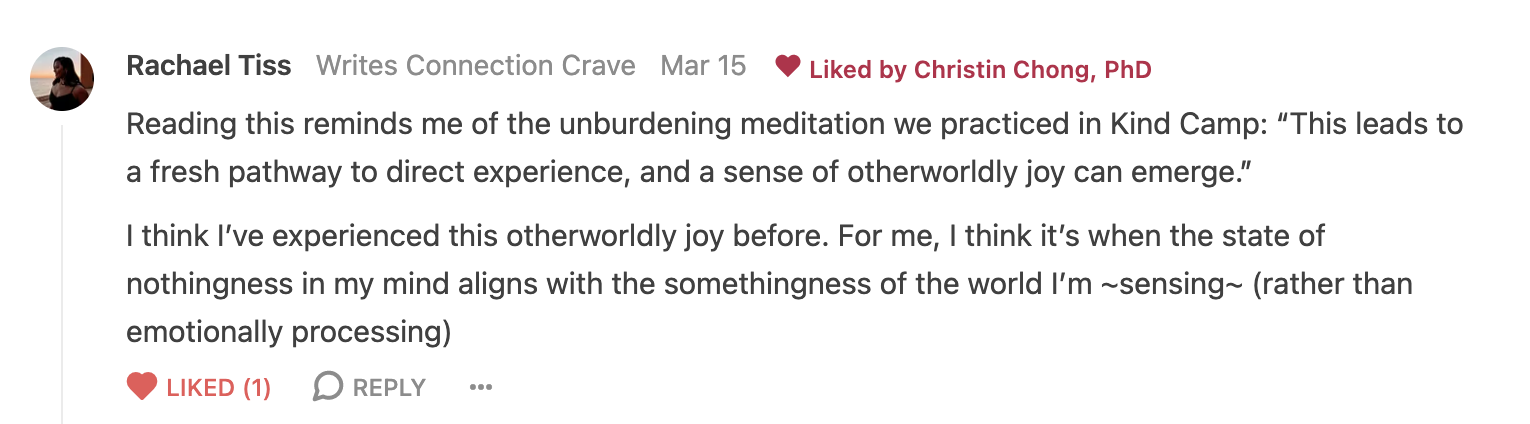
Rach read my mind, please check out her thoughtful newsletter on work-life harmony called Connection Crave 💞
What might this alternative be? The answer is feeling—though for the past 36 years, I misunderstood what the word meant. So I had vague, unrecognized feelings for most of my life, without the means to acknowledge and to heal them.
In fact, you might misunderstand what “feelings” mean right now.
Let’s turn to one of the most famous representation of feelings:
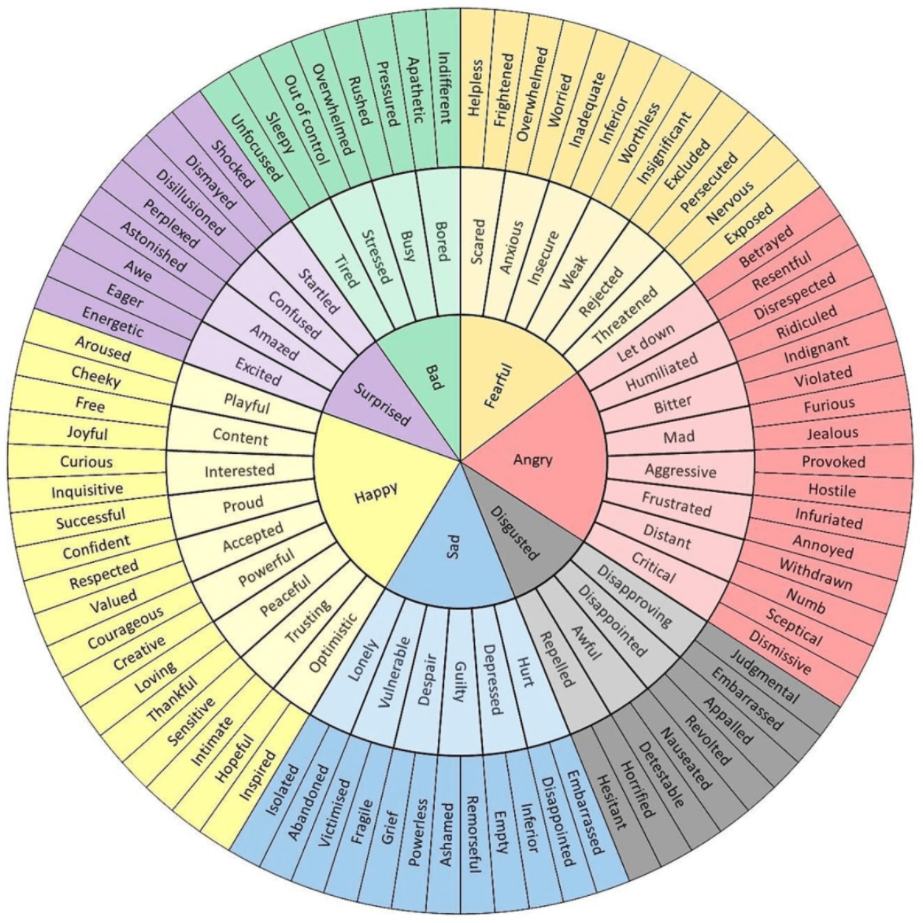
What are feelings BEYOND these words?
This wheel, despite being comprehensive in vocabulary, DOES NOT cover the full feelings spectrum! Not even close!
Here are two misinterpretations of feelings:
Feelings =/= 1 emotion
The “obvious” feeling covers up secondary feelings and prevent them from being acknowledged and healed
I thought feelings were just gradations of glad, sad, mad, or afraid. If I can find the one perfect word on the Brené Brown emotions wheel, it means I understand how I’m feeling. But there is often an “obvious” surface feeling that blinds us to subtle feelings underneath.
Example: I’ve told stories of childhood traumatic events, and I contextualized it as “wow, bad shit happened.” BUT that hid the deeper grief—that “wow, bad shit happened, AND no one cared.” I couldn’t see the powerful effects of feelings neglect because I had “turned off” my need for support from a young age, since the feelings wasn’t attended to anyway.
This is a common misunderstanding about feelings because it “feels” like we have already “felt” the feeling. But there’s more underneath that subconsciously influence our moods and behaviors, like festering wounds that await our attendance to heal properly.
Feelings =/= JUST emotions
Somatic tension / qi / vitality are also feeling dimensions
At my weeklong silent retreat, I experienced how to sense and let go of somatic tension. It’s a whole degree of feeling that goes beyond emotions, and what I interpret as “qi” or vitality.
This is a new modality of feeling for me, for which I’m developing nascent sensitivity. I wouldn’t have gotten here without substantial help from my friend Lyssa Menard. Before I went on retreat, she gave me a beginner’s qi gong lesson that shifted how I sensed somatic tension / qi / vitality. This skill in turn allowed me to understand my meditation teacher’s instructions, and allowed me access to greater levels of stillness and otherworldly joy.
And if you are reading this, you are in luck because Lyssa is offering free qi gong lessons for a limited time in support of her certification process. Please subscribe to her newsletter if you want to stay apprised of her class offering schedule in the coming weeks.
**Subscribe to **
The satisfaction of feeling shitty in multiple dimensions
The unexpected benefit of feeling in new dimensions isn’t otherworldly joy, because that still takes practice and relies on circumstances outside of our control. I can’t promise you that.
Instead, it’s how feeling shitty feels…more satisfying.
It’s like eating durian or a particularly ripe cheese—these foods smell and taste “bad” at first, but it’s possible to develop a complex palate with new levels of appreciation for their bizarre flavors.
In the past, if something bad happened, I’ll get stuck on feeling bad out of guilt, shame, or disappointment. But now, it’s possible to move beyond these initial feelings into richer ones like grief and responsive compassion, for having to deal with such experiences. It makes feeling bad feel…oddly good.
What do you think of these feeling dimensions? Are they obvious to you? What else am I missing as a feelings-noob?
Warm Wishes,
Christin
How I stumbled upon new feeling dimensions by accident, and a recent “durian” experience
A listening course that unraveled me in a good way
I took Rik van de Berge’s () listening course thinking it will make me a better chaplain and coach. But having learned how to listen better, my classmates and I started pondering, hmm, have we ever been truly listened to?! (This is a question that might send you down a deep rabbit hole.) That’s how I realized that I had fooled myself for my whole life about my core childhood traumas—it’s not that we had experienced near-murder, poverty, or my dad’s chronic illness. It’s that my parents had so much to deal with so they never were able to tend to me, even with basic listening.
This came to a head when I told my therapist, “I thought all parents have to do is to make sure their child isn’t dead.” I heard myself say that and thought, wow, I would feel so sad for the person who thinks this. But this person was me! I spent several weeks grieving and tending to myself, and felt more healed than I realized I needed.
The “durian” of rejection
I recently applied for a content creation grant and got rejected immediately after the interview. In the past I really would have dwelled on what went wrong, why did I screw it up, etc. etc. But now I see that the interview experience was actually unexpectedly brisk. It’s a lot easier to be savor these “stinky” experiences when I can taste the complexity of flavors.
Notes mentioning this note
There are no notes linking to this note.